

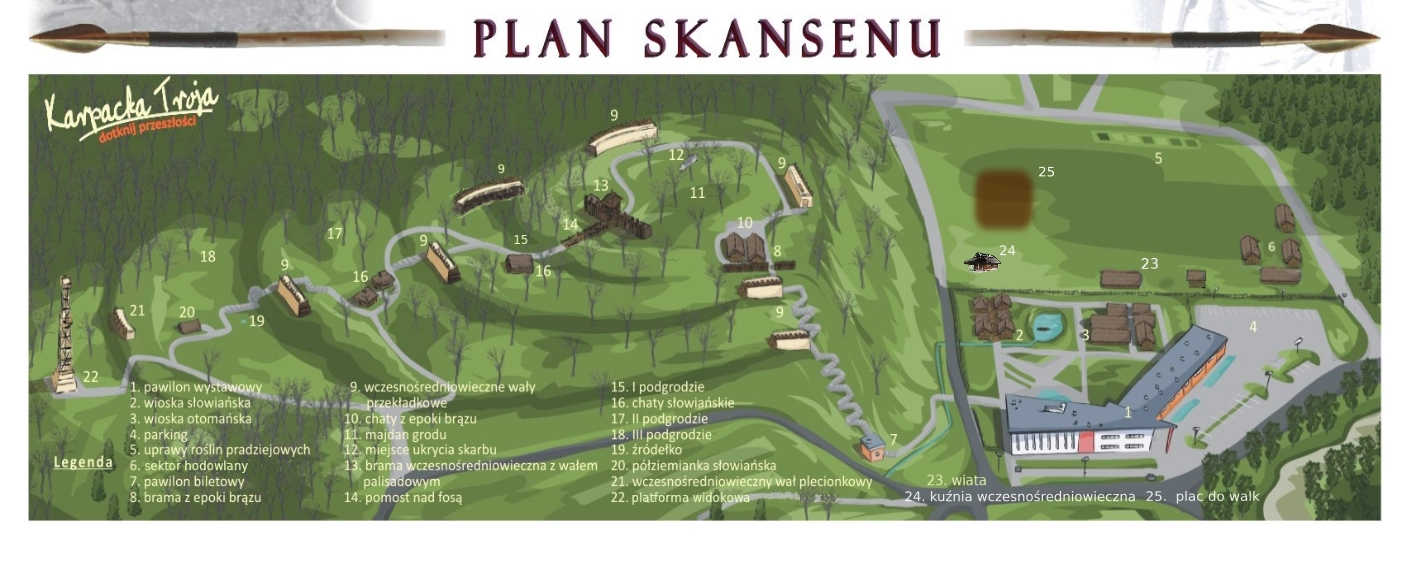
Map of Open Air Museum

10.12.2020
SIGHTSEEING
Individual and group tours (with a tour guide) are welcome Tuesday to Sunday. Most of the tour takes place outdoors, therefore it is advisable to be prepared and clothed accordingly to the weather conditions. The sightseeing tour starts with the screening of the film entitled Trzcinica, The Carpathian Troy, after which the group walks outside the Exhibition Pavilion, into the Archaeological Park (with reconstructed settlements of the Otomani-Füzesabony Culture and the Slavonic village). The last part of the tour is the visit to the “Royal Earthwork” hillfort and climbing up the Viewing Tower at the top of the hill. The sightseeing tour (including the screening of the film) lasts ca. 120-150 minutes. Individual tours of the whole open-air museum last at least 90 minutes.
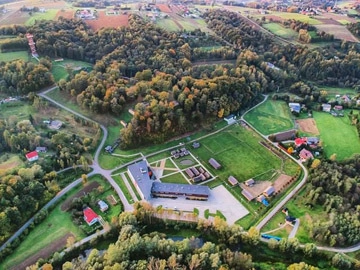
PLAN OF THE OPEN-AIR MUSEUM
FILM
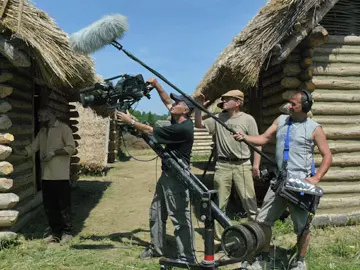
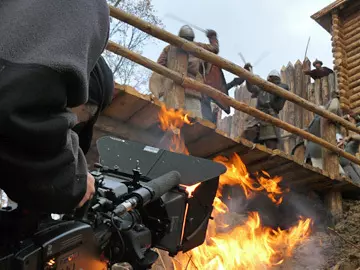
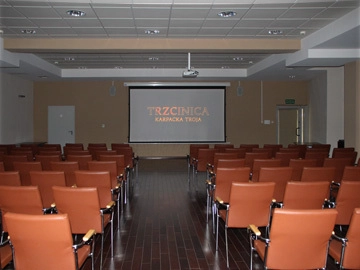
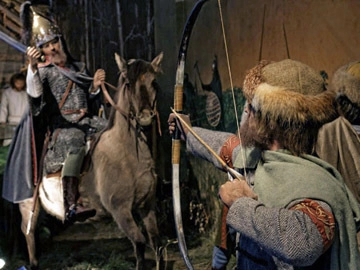
The film Trzcinica, The Carpathian Troy, displayed in the Conference Hall inside the Exhibition Pavillion introduces the viewer to the history of the hillfort and serves as an excellent base for the sightseeing tour of the open-air museum. The film, featuring some of the best reconstruction groups to date, directed on a grand scale by Zdzisław Cozac, constitutes a peculiar document of the history of our Troy. It has been awarded two Światowid Statuettes at the 1st Festival of Archaeological Films in Cracow in 2010.
EXHIBITION HALL
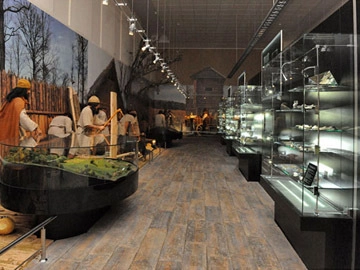
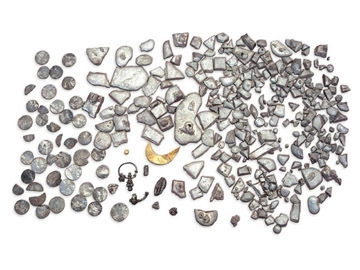
The Permanent Exhibition introduces the history of Trzcinica through the pre-arranged scenes from everyday life at the beginning of the Bronze Age and the early Middle Ages. It boasts the artefacts found throughout the years of excavations on site. The exhibition has been arranged by the Subcarpathian Museum in Krosno, according to the script devised by Jan Gancarski and Krzysztof Gierlach. Presented exhibits, owned by the Subcarpathian Museum in Krosno and the Regional Museum in Jasło, are complemented by copies of artefacts chronologically and culturally adequate to the Trzcinica finds, from the areas of Poland, Slovakia and Hungary.
ARCHAEOLOGICAL PARK
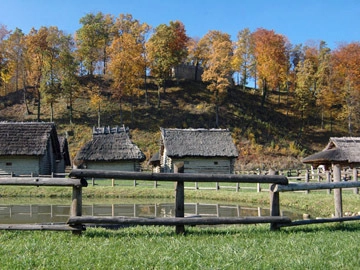
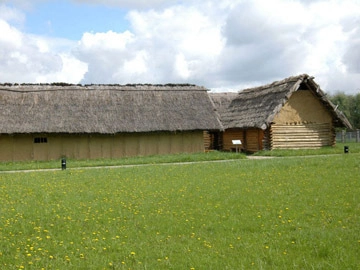
There are two settlements reconstructed in the Archaeological Park – the Bronze Age settlement and the early Medieval one. The Bronze Age village constitutes of impressive Otomani-Füzesabony cottages. The Slavonic village boasts multiple-type constructions including a smithy and a bread oven. The village is the arena for open-air events, with warriors’ camps, ancient crafts’ shows, tournaments and workshops.

BREEDING AREA
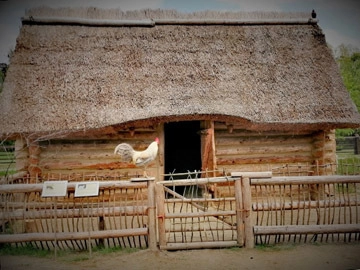
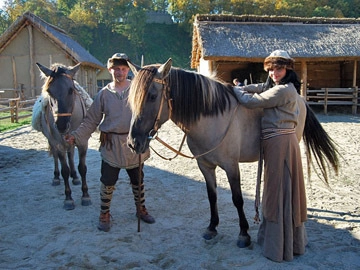
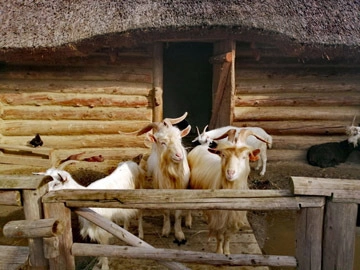
The breeding area was opened in 2018. The animals which live in the sheds and stables are heather sheep, Carpathian goats, Polish ponies, Highland cattle and long-haired Hungarian grey cattle. They accompanied the inhabitants of the “Royal Earthworks” hillfort in the Bronze Age and the early Middle Ages. In the open-air museum, we have a small patch of land that is used for harvesting such types of crops as emmer wheat, einkorn, spelt, millet, barley, as well as lentils and peas. Tools used for cultivating these crops include reconstructed prehistoric devices such as wooden ploughs, diggers and sickles.
THE ”ROYAL EARTHORKS” HILLFORT
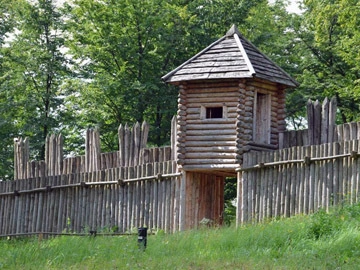
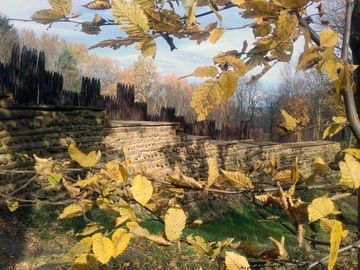
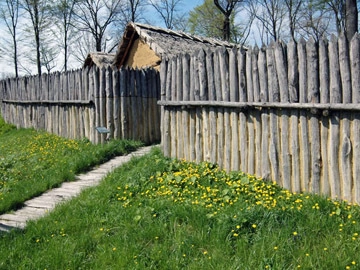
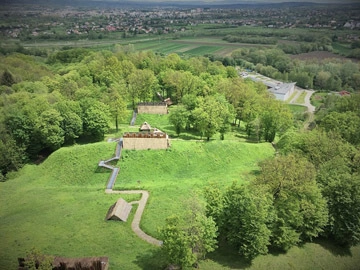
For centuries, the hill has been referred to as “The Royal Earthworks”, due to the location of defensive settlements from the Early Bronze Age and the Slavonic hillfort from the early Middle Ages. Over 200 000 unique artefacts have been discovered there to date. Parts of earthwork, cottages and gates have been reconstructed exactly where they were found. The hillfort encompasses an area of 3.5 ha and constitutes of the main court, and three wards, surrounded by high earthwork embankments of different construction, with their total length of over 1200 m. There was a freshwater spring within the settlement, used in the early Middle Ages as well.
VIEWING TOWER
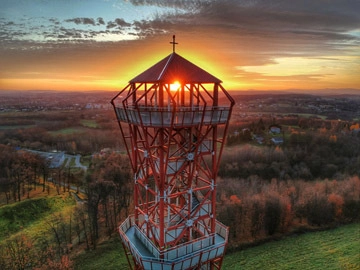
The Viewing Tower, erected in 2014 measures over 40 metres in height. The first observational level available for visitors is on the height of 20 metres, and the second is on 33 metres. Entrance to the Tower is an integral part of the sightseeing tour. This is an excellent observation point to see the vast areas of the Beskids, Carpathian Foothills and the Jasło-Sanok Basin. On a clear day, the visitors can even see the Tatra Mountains, located over 100 km away. A webcam located on top of the Viewing Tower allows everybody to check what is going on in the open-air museum without leaving their house.
Map of Open Air Museum
10.12.2020